
Join the ETIP HYDROPOWER general assembly to receive news about our activities, events and research & innovation in hydropower opportunities.
Join Us
Join the ETIP HYDROPOWER general assembly to receive news about our activities, events and research & innovation in hydropower opportunities.
Join Us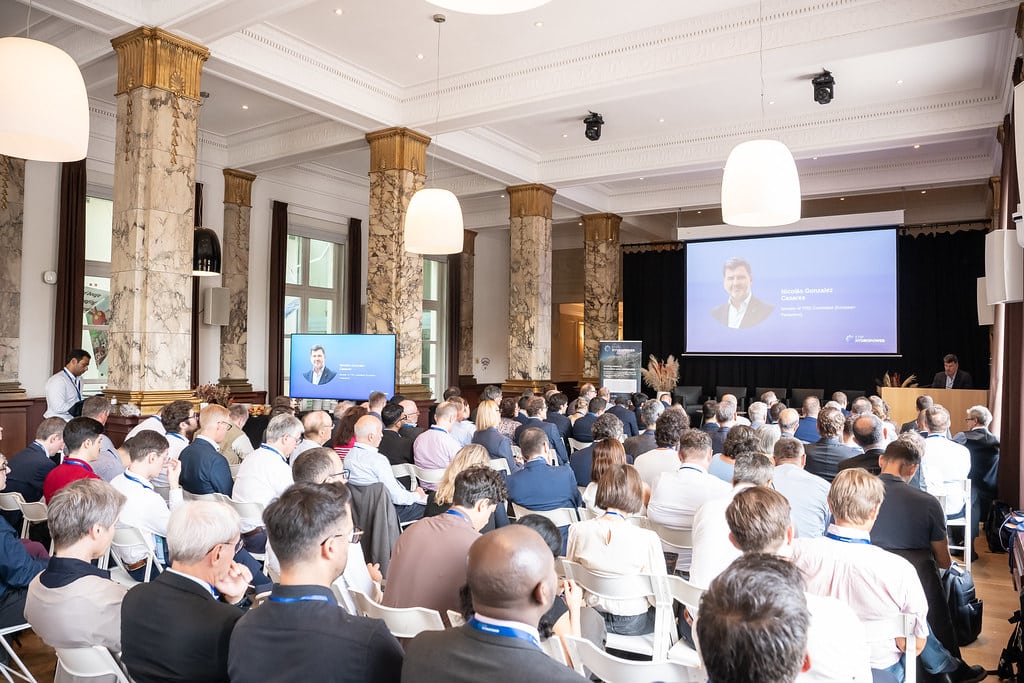
The 4th Brussels Hydropower Day brought together 232 participants from across the European hydropower community to discuss how flexibility, storage, modernisation and digitalisation can strengthen Europe’s future electricity system.
Brussels, September 2026 – Europe’s transition towards a more renewable and electrified energy system is creating a growing need for flexibility, storage and resilient electricity infrastructure. Against this background, the 4th Brussels Hydropower Day, organised by ETIP HYDROPOWER on 8 September 2026, brought together policymakers, industry representatives, researchers, technology providers and sectoral organisations to examine the evolving role of hydropower in Europe’s power system.
Under the theme “Energy Security and Digitalisation in Europe’s Power System”, discussions throughout the day highlighted a shift in how hydropower’s strategic value is understood. Beyond renewable electricity generation, hydropower and pumped-storage hydropower can provide long-duration storage, balancing, system adequacy, inertia, frequency and voltage support, black-start capabilities and system restoration, while contributing to wider water-management and climate-resilience objectives.
The high-level opening brought together Nicolás González Casares, Member of the European Parliament and ITRE Committee; Paula Rey García, Head of the Renewables and Energy System Integration Policy Unit at the European Commission’s DG ENER; and Bruce Douglas, CEO of the Global Renewables Alliance.
Their interventions connected hydropower with some of the central challenges facing Europe’s energy system: accelerating electrification, integrating increasing shares of wind and solar, reducing dependence on imported fossil fuels, strengthening grids and developing sufficient non-fossil flexibility and storage.
A recurring message was the growing importance of pumped-storage hydropower as Europe seeks to shift renewable electricity across time and reduce curtailment, congestion and exposure to volatile energy prices.
The subsequent plenary discussion on “Securing Europe’s Power: Hydropower’s Role in Energy Resilience and Strategic Autonomy” examined these challenges from the perspectives of utilities, electricity-system operation, research and innovation, and economic analysis.
The discussion identified a continuing gap between the multiple services hydropower can provide to the electricity system and the way those services are currently recognised in markets, investment frameworks and long-term infrastructure planning. Permitting, long development timelines, grid access, investment certainty and predictable remuneration for system services were among the principal barriers identified.
Digitalisation formed the second major pillar of the event.
During the plenary debate “Digitalising Hydropower for System Flexibility and Integration”, representatives from PPC Group, ABB, ANDRITZ, the European Commission’s DG INTPA and the European Investment Bank discussed how digital technologies can support more flexible, reliable and resilient hydropower operation.
Digital twins, advanced sensing, forecasting, predictive maintenance, AI-supported optimisation and enhanced control systems are creating new opportunities to extract greater value from Europe’s existing hydropower fleet.
However, speakers stressed that successful digital transformation requires more than technology alone. Data quality and accessibility, interoperability, cybersecurity by design, explainability, financing, skills and organisational change were identified as essential conditions for moving from successful pilot projects towards deployment across entire fleets.
The discussions also emphasised that digitalisation should support engineering judgement rather than replace it. As digital tools become increasingly involved in operational and maintenance decisions, operators need to understand and trust the information and recommendations they provide.
The afternoon programme translated the strategic discussions into concrete research and technological developments through four technical sessions involving the iAMP-Hydro, Di-Hydro, H-HOPE and SHERPA projects.
The solutions presented covered digital and environmental monitoring, forecasting, predictive maintenance, digital twins, decision-support platforms, energy harvesting, turbine refurbishment, additive manufacturing, flexible operation, biodiversity and ecosystem services.
Results presented during the sessions demonstrated the progression of hydropower digitalisation from collecting operational and environmental data towards an increasingly integrated chain of:
measurement → forecasting → diagnosis → simulation → optimisation → operational decision-making.
At the same time, the demonstrations highlighted the challenges that remain when transferring technologies from controlled research environments to operational hydropower plants, including heterogeneous data, legacy infrastructure, limited labelled datasets and site-specific operating conditions.
The project exhibition provided an additional opportunity for participants to interact directly with technologies, prototypes and project teams during the networking periods.
The 2026 edition received 274 registrations, with 232 participants ultimately identified as attending: 129 in person and 103 online.
Industry and companies represented approximately half of the audience, alongside universities, research centres, policymakers, public authorities, associations and sectoral networks. Around 169 participants continued into the afternoon technical programme, corresponding to approximately 73% of the overall identified audience.
Participant feedback also reflected a high level of satisfaction with the event. The Hydropower Day achieved an average rating of 4.59 out of 5, with 95.5% of respondents awarding four or five stars. Participants particularly highlighted the relevance of the programme, diversity of perspectives and opportunities for networking and exchange.
The event concluded by looking towards the next stage of ETIP HYDROPOWER’s activities and the strengthening of hydropower within the European research and innovation landscape.
The discussions throughout the Hydropower Day pointed towards a common direction: Europe already possesses a substantial hydropower asset base, technological expertise and industrial capabilities, but realising their full future value will require coordinated progress in modernisation, digitalisation, environmental integration, market design, investment frameworks and research and innovation.
As Europe builds a more renewable and electrified electricity system, hydropower’s contribution will increasingly be measured not only by the electricity it generates, but also by its ability to store energy, respond rapidly to system needs, support grid stability and strengthen resilience.
The Brussels Hydropower Day will continue to provide a meeting point for the European hydropower community to connect these technological capabilities with policy, investment and deployment.
ETIP HYDROPOWER – the European Technology and Innovation Platform for Hydropower brings together stakeholders from the European hydropower sector to support research and innovation, strengthen cooperation between industry, research and policy, and contribute to the development of hydropower as part of Europe’s clean, secure and resilient energy system.
Media contact:
Iraia Nuñez / ETIP HYDROPOWER Secretariat
inunez@zabala.eu
Contact Us about this item.